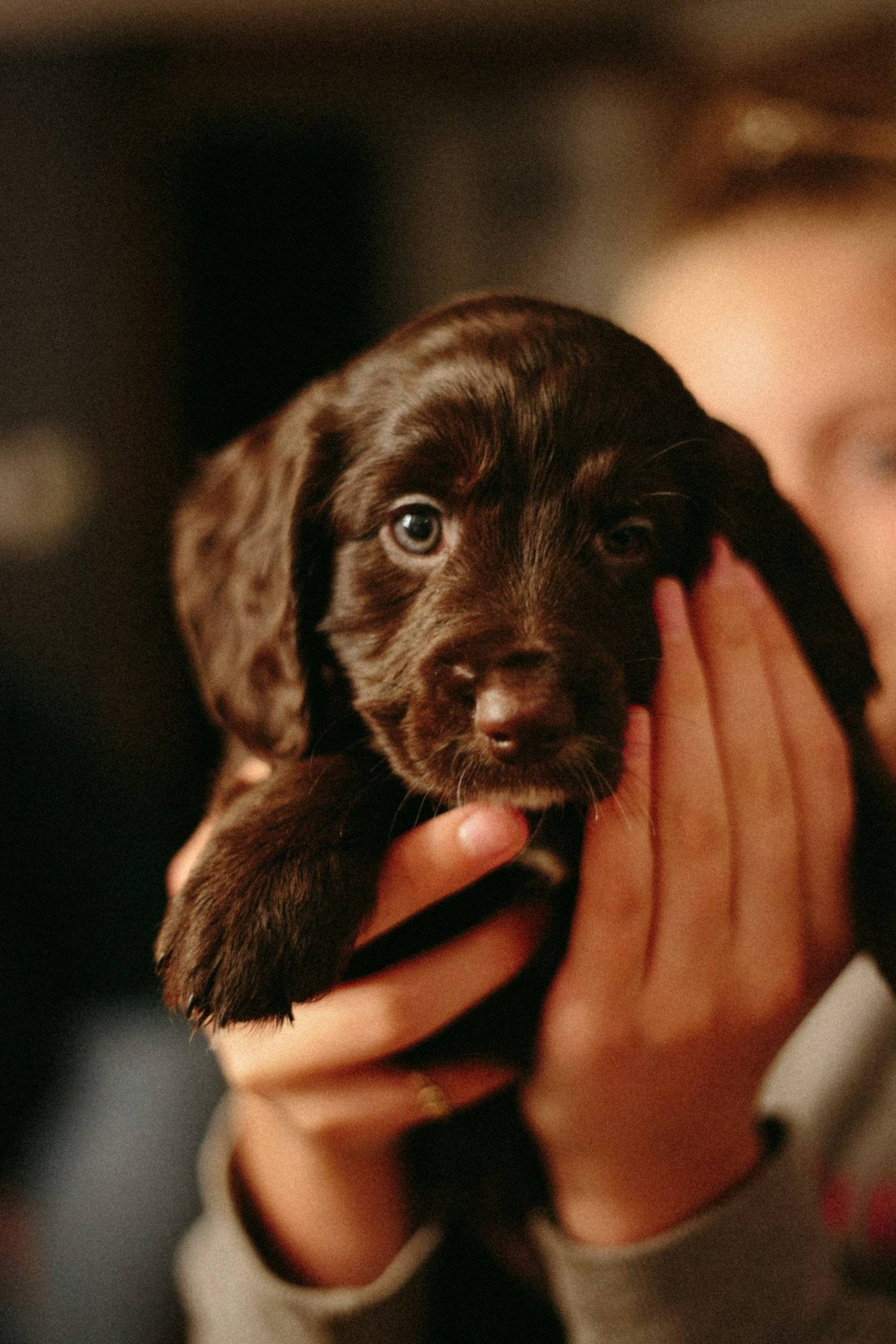
Just brought home a Lab puppy, or about to, and wondering “now what?” This is the one shopping list you need, organized by when you’ll need each item. Tick the boxes as you go (saved in your browser) or print it. For month-by-month development, vaccines and training milestones, read the companion chocolate Lab puppy first-year guide.
A Lab grows from about 10–15 lb at 8 weeks to 55–80 lb as an adult. That’s why this list buys some things adult-size now and saves others for the 3–6 month size-up. Our puppy growth calculator estimates your puppy’s adult weight.
Before day one
Crate, bed and safe space
- Adult-size wire crate with divider. Most Labs need a 42” crate; use the divider so the puppy only has room to stand, turn and lie down. MidWest iCrate 42” double door includes a divider (spare divider). See Lab crate sizing.
- Chew-resistant crate pad or old towels. Puppies shred plush beds; start cheap. Crate pads. Save the orthopedic bed for later.
- Baby gate(s) for kitchen and stairs. Carlson extra-wide walk-thru gate.
- Exercise pen around the crate for a safe play zone. MidWest 36” exercise pen.
Food and bowls
- The breeder’s current food (a week’s worth) so you can transition gradually.
- Large-breed puppy food to switch to over 7–10 days. Large-breed formulas control calcium and calories for growing joints. Purina Pro Plan Large Breed Puppy. Compare options in best puppy food for Labs; fresh options include The Farmer’s Dog and Ollie.
- Stainless steel bowls (food + water). Stainless bowls.
- Measuring cup or kitchen scale. Labs overeat. Portion with the feeding chart or calorie calculator.
Collar, leash and ID
- Adjustable puppy collar (you’ll replace it at 3–6 months). Puppy collars.
- ID tag with your phone number. Engraved ID tags.
- 6 ft leash. 6 ft leashes. Skip retractables for training.
- Microchip registered in your name. Ask the breeder for the chip number and update the registry; the AVMA notes chips only work if contact details are current.
Cleanup
- Enzyme cleaner. Removes urine odor so puppies don’t return to the spot. Nature’s Miracle Advanced.
- Poop bags. Earth Rated refill rolls.
- Pee pads (optional; only if you can’t get outside quickly). Puppy pads.
- Paper towels and a lidded trash can.
Teething and chew toys
- 2–3 puppy-safe chew toys. KONG Puppy Large (stuff and freeze for teething). Avoid anything that fails the AAHA thumbnail test. More picks: best toys for Labs and safe chews and bones.
Car ride home
- Crate or secured carrier for the car, or a towel-lined lap for a short ride with a second person. A crash-tested car harness comes once the puppy fits (see months 1–3).
Book and buy
- Vet appointment within the first few days. Bring the breeder’s health and vaccine records.
- Pet insurance quote. Enroll early; NAPHIA explains that anything noted before coverage or during waiting periods is generally excluded as pre-existing. Compare Lemonade, Embrace, Trupanion and Fetch in our pet insurance guide for Labs.
Week 1
- First vet visit: exam, deworming plan, vaccine schedule (see table below).
- Training treats (small and soft). Zuke’s Mini Naturals.
- Clicker (optional, for marker training). PetSafe Clik-R. Start puppy training week by week.
- Treat pouch. Treat pouch.
- Crate routine. Short, positive crate sessions per the AKC crate-training steps.
- Puppy-proof: cords, shoes, socks, medications, kids’ toys and trash out of reach. Swallowed socks are a classic Lab vet bill.
- Sign up for puppy class. AVSAB recommends puppies can start socialization classes as early as 7–8 weeks with at least one set of vaccines.
Months 1–3
- Front-clip harness for leash training. PetSafe Easy Walk; see the harness guide and leash-pulling plan.
- Crash-tested car harness once your puppy fits the size chart. Kurgo Tru-Fit Enhanced Strength (Large).
- Grooming kit: deshedding brush (FURminator), nail grinder, gentle dog shampoo, and a vet-approved ear cleaner. Start handling paws and ears early; Labs are prone to ear infections.
- GPS collar for escape-prone puppies once they’re big enough. Fi smart collar; compare in best GPS collars for Labs.
- DNA health test (optional): screens for EIC, CNM, PRA and coat-color genes. Embark; see DNA tests for Labs.
- Long line (15–30 ft) for safe recall practice. Long line. Build basic commands.
- Snuffle mat or puzzle for rainy days. Snuffle mat.
Months 3–6: the growth stage
Labs grow fast here. Weigh monthly and check the growth chart.
- Move the crate divider back (or size up if you started small). Your Lab should be able to stand and turn; see crate sizing.
- Bigger collar and harness. Check fit weekly; you should fit two fingers under the collar.
- Adult-size toys. Swap KONG Puppy for KONG Extreme and add West Paw Zogoflex as adult teeth arrive (around 4–6 months). See toys for heavy chewers.
- Real bed once chewing calms down. Big Barker orthopedic or see dog beds for Labs.
- Re-check food amounts. Adjust with the calorie calculator. Keeping a puppy lean protects hips and elbows.
- Talk to your vet about spay/neuter timing. Research on Labs suggests discussing the timing carefully; see the first-year guide.
- Intermediate training: heel, stay and off-leash prep.
Vet visits and vaccine schedule
Per the AAHA 2022 Canine Vaccination Guidelines. Your vet adjusts for local risk and your puppy’s history.
| Age | Typical visit | Core vaccines (AAHA) |
|---|---|---|
| 6–8 weeks | Often done by breeder | First DHPP (distemper, adenovirus, parvovirus ± parainfluenza) |
| 10–12 weeks | Vet visit | DHPP booster; leptospirosis series can start at 12 weeks (two doses 2–4 weeks apart) where recommended |
| 14–16 weeks | Vet visit | DHPP booster (last dose at 16 weeks or later); rabies at 12–16 weeks per local law |
| ~6 months–1 year | Vet visit | Discuss boosters, spay/neuter timing, heartworm and parasite prevention |
DHPP doses are given every 2–4 weeks until at least 16 weeks of age, per AAHA. Keep your puppy away from unknown dogs and high-traffic dog areas until your vet says the series is complete.
What it costs
We only list costs we can cite. The ASPCA’s cost table estimates roughly $3,200 for a dog’s first year, including one-time costs (spay/neuter, initial vaccines, supplies) and recurring costs (food, routine vet care, insurance). Large breeds like Labs eat more and need bigger gear, so budget toward the higher end. For vet procedures, see our Lab vet cost guide and lifetime cost calculator. For insurance math, read is pet insurance worth it for Labs?.
Where to go next
- Development and milestones: chocolate Lab puppy first-year guide
- Training: puppy training week by week, then basic commands
- Food: best puppy food for Labs and the feeding chart
- Toys and chews: toys for heavy chewers and safe chews and bones
- Insurance: best pet insurance for Labs
- Names: chocolate Lab names