 ChocolateLabs

 Coat Color & Genetics
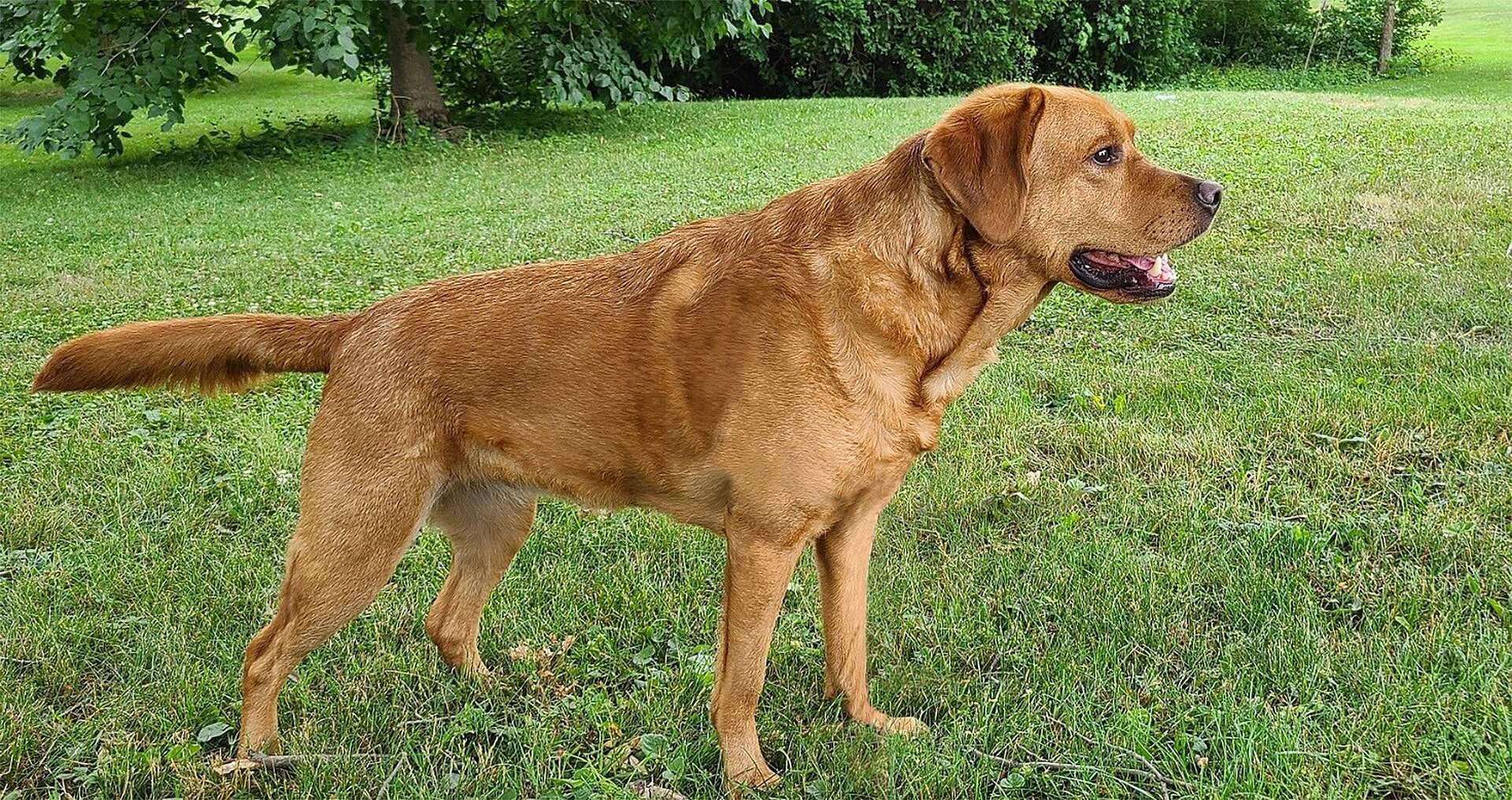

Short answer: a fox red Lab is a yellow Labrador at the darkest, reddest end of the yellow range. It isn’t a separate color, a mix or a rare variety. The AKC standard says “Yellows may range in color from fox-red to light cream”, so a red Lab is registered and shown as a yellow. Genetically it’s the same ee yellow as any other; the depth of red comes from shade genes that science hasn’t fully pinned down in Labs.
Fox red is a shade of yellow
The breed standard recognizes only three colors: black, yellow and chocolate. Fox red sits inside “yellow”, along with every shade down to light cream, “with variations in shading on the ears, back, and underparts of the dog” (AKC). In practice that means:
- A fox red Lab can be AKC-registered and shown like any yellow.
- A coat that is darker or lighter on the ears, back or belly is fine. The standard allows that shading.
- “Red Lab” and “fox red Lab” mean the same thing. The standard’s wording is “fox-red”.
A fox red Lab is not the same as a chocolate. A chocolate’s coat comes from brown (bb) pigment and it has a brown nose. A fox red’s coat is red-yellow pigment, and its nose is normally black.
The genetics of a red Lab
Every yellow Lab, fox red included, has two copies of the recessive e allele at the MC1R gene. That stops black or brown pigment showing in the hair, so the dog can only make red/yellow pigment in its coat (UC Davis). Two consequences:
- Fox reds breed like yellows. Two yellows (of any shade) can only produce yellow puppies. A fox red bred to a black or chocolate that carries e can produce yellow puppies too.
- Nose color follows the B gene. A fox red with BB or Bb has a black nose; one with bb has a brown nose and foot pads, per UC Davis.
What makes one yellow pale and another deep red is less clear. The Labrador Retriever Club, Inc. says yellow shadings come from modifier genes acting on ee, not from the dilute gene. A 2020 study found a DNA variant near the KITLG gene that tracked red intensity in several breeds, but it did not correlate with coat shade in Labrador or Golden Retrievers, so the genes behind Lab shade are still unknown (Weich et al., 2020).
Buying a fox red puppy
- No test predicts the shade. An E locus test can confirm a dog is yellow, but nothing on a standard panel promises how red a puppy will be. Look at the parents and their earlier litters.
- Be wary of “rare” pricing. Fox red is an accepted, well-known shade of yellow. It’s not a reason to skip the health testing that matters: hips, elbows, eyes and EIC. See how to find a good Labrador breeder.
- Don’t confuse it with dilutes. “Champagne” is a dilute yellow with two copies of the d gene, which the breed’s parent club does not accept. See silver, charcoal and champagne Labs.
A DNA panel that reports E, B and D loci tells you a lot about a breeding dog. Compare options in best DNA test for Labs.
Fox red Lab health, size and temperament
There’s no evidence that shade affects health. The UK VetCompass study grouped all yellows together: they had 17.0% prevalence of ear infections versus 12.8% in blacks and 23.4% in chocolates, and non-chocolate Labs had a median lifespan of 12.1 years (McGreevy et al., 2018). We found no study comparing fox reds with paler yellows.
Size follows the same standard for every color: 22½–24½ inches and 65–80 lb for males, 21½–23½ inches and 55–70 lb for females (AKC). See how big Labs get. Temperament depends on breeding line and training, not coat color. See Lab temperament.
Other Lab colors
- Yellow Labs: the full yellow range, genetics and history
- White Labs: the palest yellows
- Black Labs: the most common color
- Lab color inheritance: how all three colors are passed on