 ChocolateLabs

 Coat Color & Genetics
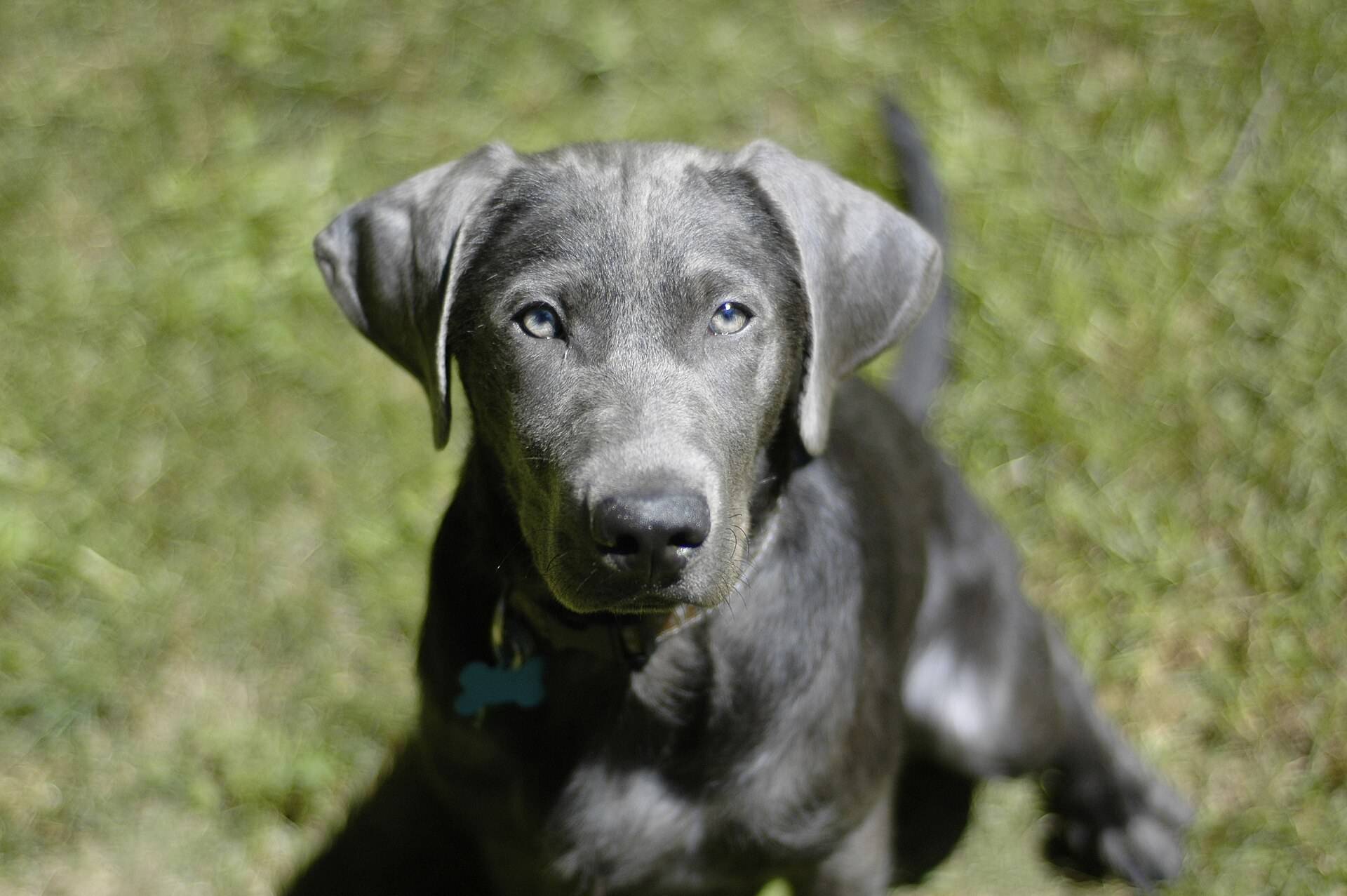

Short answer: a silver Lab is a chocolate Labrador with two copies of the recessive dilute gene (dd), which lightens the brown coat to a grayish silver. The same gene turns a black Lab charcoal and a yellow Lab champagne. None of these is one of the three colors in the AKC standard, and the breed’s AKC parent club says it does not consider silver, charcoal or champagne dogs purebred Labradors.
How dilute works
A third gene, the D locus (MLPH), can “dilute” pigment when a dog carries two recessive copies (dd).
| Base color | + dd | Common name |
|---|---|---|
| Chocolate (E_bb) | dilute | Silver |
| Black (E_B_) | dilute | Charcoal |
| Yellow (ee) | dilute | Champagne |
Because d is recessive, two normal-looking chocolates can each carry one d and produce a silver puppy.
Charcoal Labs
A charcoal Lab is the dilute version of a black Lab: genetically E_B_dd. The dilute gene lightens the black pigment to a gray coat. Everything else about charcoals (and the debate around them) is the same as for silvers. The AKC standard says “blacks are all black” and lists only black, yellow and chocolate, so a charcoal is outside the standard even when it can be registered. If you’re comparing colors, see our black Lab guide.
Champagne is the dilute of yellow (ee plus dd), and the breed club’s objection covers it too. A champagne is not the same thing as a very pale yellow: cream and “white” Labs are ordinary yellows (see the white Lab guide and the yellow Lab guide), while a champagne has to carry two copies of the dilute gene.
The controversy
The AKC standard lists only black, yellow and chocolate, so silvers are registered as chocolate. Many breed enthusiasts argue the d allele wasn’t historically present in Labs and arrived through crossbreeding. Others disagree. The Labrador Retriever Club, Inc., the AKC parent club for the breed, states that “a silver, charcoal or champagne Labrador is not a purebred Labrador retriever.” After a club dilute committee reported in April 2026, the AKC Board considered a request to require microchipping and a DNA sample identifying dilute markers for every Labrador it registers, and voted unanimously not to mandate it, according to the club’s update on dilutes. Either way, a breeder who markets silver puppies at a premium as “rare” is a reason to ask more questions. See choosing a breeder.
Health consideration: color dilution alopecia
In several breeds, dilute dogs can develop color dilution alopecia: hair thinning or loss and skin infections in dilute-colored areas. Many dilute dogs never have it. If you own a silver, watch for coat thinning and itchy, flaky skin, and see your vet early.
How to know if your Lab carries dilute
A DNA test that reports the D locus answers it. Most consumer panels do. Compare options in best DNA test for Labs.
For the basics behind the B, D and E genes, see how Lab coat color is inherited, or predict a litter with the coat-color calculator. The AKC breed standard explains how dilute colors are registered.